

Chapter 4: Assigned, Absorbed, Surviving
The Silence is Part of What Happened: Ellen Monks, the Archive, and a Family Reckoning

The story steps off the ship and into the colony’s rooms: where the Andromeda docked, how allocation worked, and how Ellen and Catherine were split at the threshold. Catherine was marked Factory, not assignable. Ellen was assigned as a female servant.
The archive likes beginnings and endings. A ship’s arrival. A marriage. A death. A trial.
What it dislikes is the missing middle: service, labour, small kindnesses, and the kind of endurance that leaves no receipt.
This chapter is about that fork. About what “allwork” meant when you had no rights, no money, and no safe way to say no. About movement without maps. About belonging that begins as ownership and sometimes, over time, mutates into something harder to name.
And because the record does what it always does, we will hold two stories side by side: the official version, and the plausible human version. The first is neat. The second is alive.
That is the next set of doors in this house.
Before we step inside
This is Chapter 4 of a chaptered inquiry into the life of Ellen Deasy, later Ellen Monks, published here on Substack one chapter at a time. Serialisation is my discipline. It makes me move slowly, stay close to what holds, and show my workings. I will do my best to walk on records we can point to: ship and indent paperwork, government notices, parish registers, and the newspaper trail. When the ground turns to rumour, I’ll say so. When the record falls silent, I’ll give it space.


The colony’s rooms
Ships arrive, and the newspapers dutifully count: tonnage, master, passengers, the number of convicts, the number of children. On 18 September 1834, the Sydney Herald lists the Andromeda among arrivals “from Cork”, recording women under sentence and the family baggage of them: children, and more children, and more.²
It reads like commerce, because in the colony’s public voice, that is what it is. Arrival is a ledger event. Bodies become inventory, then labour.
A few days later the government advertises the next step. Families wanting female servants may apply. There are forms. Deadlines. Undertakings. Even penalties for employers who do not keep their servants for the minimum month.³ The colony makes assignment sound like a tidy arrangement between responsible adults.
It is not lying. It is simply not telling the whole truth.
Because “apply” is not the same as “choose.” And “engagement” is not the same as consent.
When the state describes coercion in domestic words, it often aims to soften the sound. A “servant” sounds like a household matter. A “female prisoner” sounds like an administrative matter.
Both can be true while hiding what matters most.
A twenty-first century lens, carefully used
I need to name the pressure without pretending I can name the feelings.
In the simplest terms, this is what assignment was: labour extracted under threat of penalty, with no meaningful right to refuse. That is not a word from 1834. It is a modern sentence, written with a modern conscience. Still, the mechanism itself is older than the ink on these forms.
In 1834, the convict system was a labour system. Not metaphorically. Literally. The colony had the power to reassign, confine, punish, extend suffering, and take away whatever small stability a person managed to build. Women were scarce in a colony built and run by men, and scarcity makes bodies matter in ways that are not always spoken aloud.
The language of “servants” and “engagements” makes it sound domestic, even benign. But beneath it sits the state’s power, and the private household’s intimacy. That combination is not just work. It is vulnerability with rules.
So when the government invites “families” to apply for women from the Andromeda, what we are watching is not a hiring market in any modern sense. We are watching the colony feeding itself. It takes women who cannot refuse, packages them as supply, and distributes them into private homes, while keeping those deemed “not assignable” inside institutions built to discipline, contain, and sort.
This fork in Ellen and Catherine’s colonial lives is the moment the colony decides what kind of usefulness each body can be made to provide, and where.
How disposed of
I discovered a government register, a kind of arrival-and-allocation list. Ruled columns. Repeated ditto marks. A machine for sorting. Across the top it lays out the state’s categories:
Date of arrival
Name
Ship (Andromeda)
Sentence
How disposed of (the outcome, the placement, the “what was done with her” column)
When I first saw the ledger page, I felt a jolt at the last column’s heading: How disposed of.
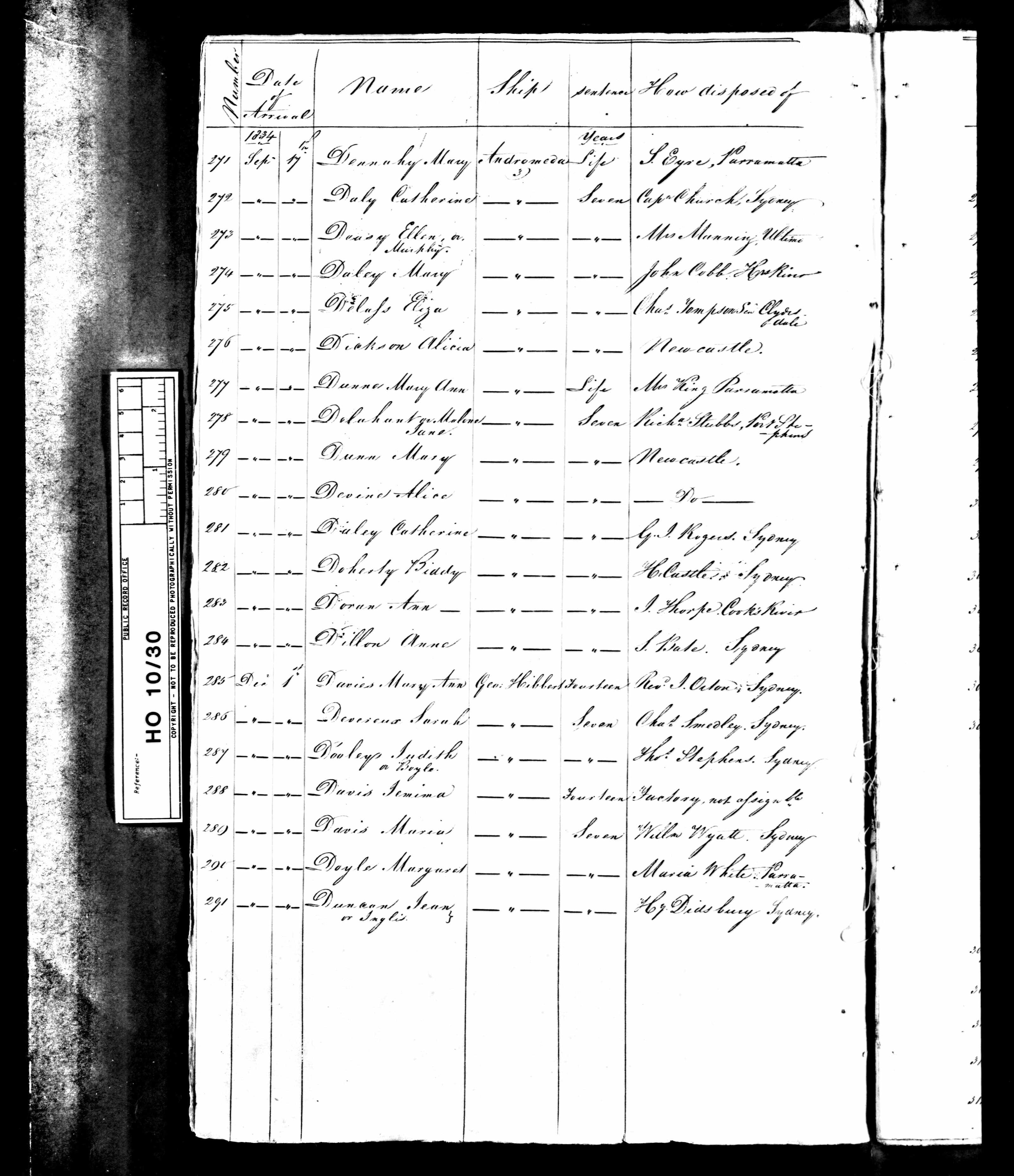
In that last column, the clerk records where each woman was sent or assigned immediately after arrival, usually as:
assigned to a named person (often “Mrs…” or “Mr…”, with a place name), or
sent to an institution (Parramatta, Hyde Park, Newcastle, and so on)
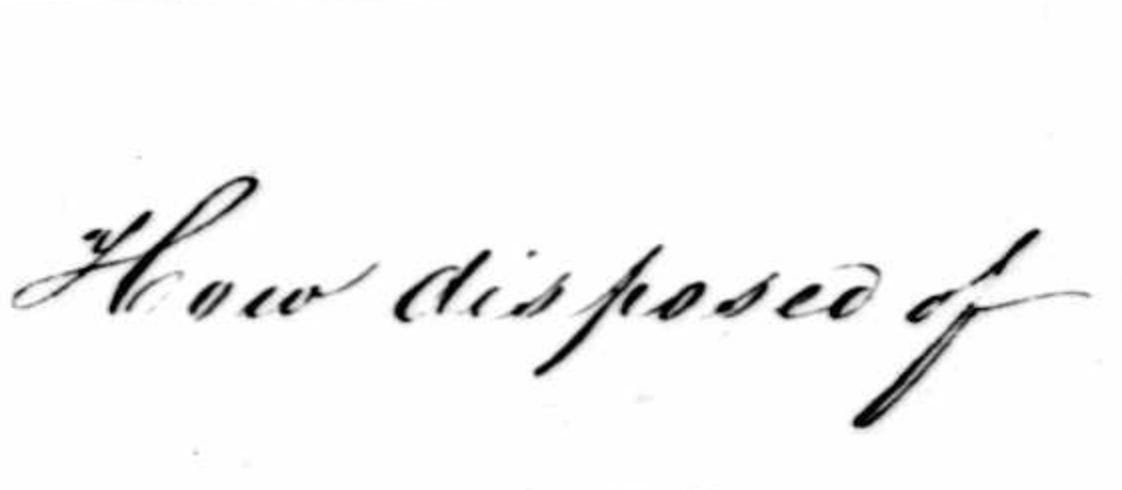
The phrase “disposed of” carries a modern sting. It belongs to rubbish. To surplus. To dead things. But in 1834 it is administrative language: dealt with, processed to an outcome.
Even with that correction, the jolt remains.
There is a cruelty in the neatness of it.
In the disposal list for the women of the Andromeda, Ellen Deasy’s line ends with a destination: Mrs Manning, Ultimo.¹ Catherine Deasy’s line ends differently: Factory, not assignable.¹
The colony does not write “mother” beside Catherine’s name. It does not write “daughter” beside Ellen’s. It does not write “grief,” or “relief,” or “fear.” It writes categories. It writes outcomes.
This is where the missing middle begins. Not with a bang. With a clerk’s hand.
Two stories held side by side
The official story
A transport arrives. The superintendent allocates. Employers sign undertakings. Servants are distributed according to need and suitability. Those deemed not assignable are kept in government custody, in institutions such as the Parramatta Female Factory. Order is preserved.
The plausible human story
